

Microneedling vs The Vampire Facial: What’s the Difference? [Infographic]
As time goes by, your face starts to show signs of aging—spots from too much sun exposure; acne scars leftover from your teenage years; and sagging skin caused by dropping collagen levels.
Not all is lost. Your skin is an amazing organ. It can heal and rejuvenate so that you can reclaim a healthy glow.
Numerous studies show that the facial rejuvenation treatments—Microneedling and the Vampire Facial®—trigger your skin's natural healing process. These procedures generate healthy skin cells that lead to many positive outcomes like even skin tone, diminished scars, and tightened texture.
But what's the difference between these popular minimally-invasive facial treatments? And which one should you choose?

Should you choose microneedling or the Vampire Facial?
What is Microneedling?
Microneedling, also called collagen induction therapy, is a procedure used to improve the appearance of your skin by addressing the following skin concerns:

Microneedling diminishes fine lines and wrinkles.
Acne scars
Other scars (burns, surgical)
Fine lines and wrinkles
Age or sun spots
Dark spots (called hyperpigmentation)
Enlarged pores
Sagging skin
Stretch marks
Hair loss
A skincare professional uses a device with tiny needles, like a derma roller or microneedling pen, to puncture tiny holes into your skin. These microscopic injuries are too small to cause visible injuries but significant enough to tell your body to heal itself by triggering new elastin and collagen production. Elastic and collagen keep your skin healthy, firm, and youthful-looking.
The tiny wounds allow for any additive to be absorbed into your skin’s deeper layers. Common additives include hyaluronic acid—which draws moisture into your skin making it plumper, and vitamin C—which brightens your skin and protects is against sun damage.
Over a few weeks after the procedure, your body makes new collagen and elastin in the injured areas of your skin. Your body also sends oxygen, red blood cells, and growth factors to enhance and improve your skin’s healing and texture.
What is the Vampire Facial?
The Vampire Facial cosmetic treatment is a souped-up version of microneedling with the addition of PRP or Platelet Rich Plasma. Kim Kardashian's Vampire Facial became famous when she posted a picture of herself with what appeared to be blood all over her face. That blood was actually PRP.
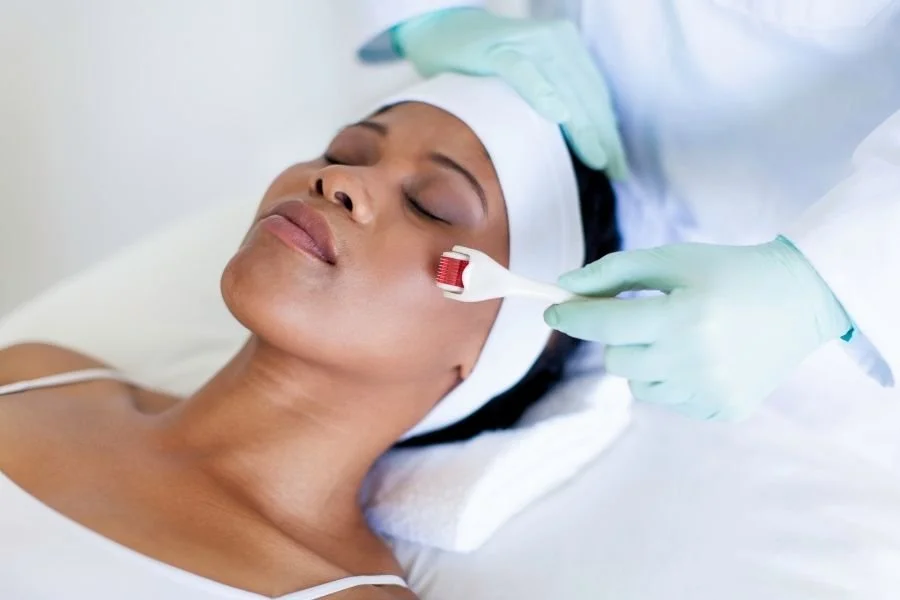
A derma roller is one type of device used to microneedle the skin.
PRP contains two elements: plasma—the liquid part of your blood, and platelets—a type of blood cell important in healing. Platelets, while well-known for their clotting abilities, also contain growth factors that trigger cell growth and tissue repair in the injured area.
After microneedling, your skincare professional applies PRP to the skin, which drinks it in through the tiny holes made by the microneedle device.
Both facial treatments can be done by a plastic surgeon. Aesthetic nurses and nurse practitioners are other certified health professionals who can do both treatments.
Which Facial Treatment Should You Choose?
Microneedling and the Vampire Facial have similar benefits—smoother, firmer, and a more even skin tone. With the Vampire Facial, however, adding PRP gives your skin extra healing and rejuvenating powers while speeding up the healing process.
Both procedures can be done on different treatment areas like your face, stomach, buttocks, legs, neck, and scalp. They have many proven benefits including:
Reduced fine lines and wrinkles
Diminished or erased scars
Tightened and toned skin
Smoothed texture
Reduced pore size
Increased elasticity
More collagen
Rejuvenated look
Hair growth
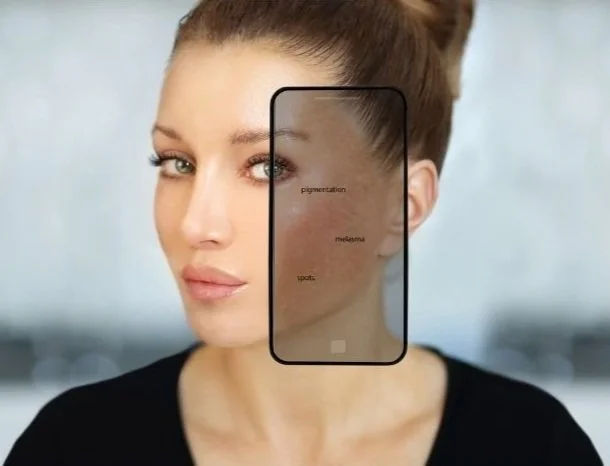
Microneedling and the Vampire Facial reduce hyperpigmenation.
Are You a Good Candidate?
Overall, microneedling and the Vampire Facial are safe treatments for different skin types. However, you may not be a good candidate if:
You are pregnant
You have an active infection or open wounds
You have darker skin or you hyper pigment easily
You are allergic to metals
You have certain skin conditions like eczema or psoriasis
You have had radiation recently
The Procedure
The first step is talk to a skincare professional. They will review your medical history and assess your skin to determine if you’re a good candidate.
Microneedling, without or without PRP, begins with your skincare professional applying a topical numbing cream to your skin. That's because the procedure may cause some pain or discomfort—especially if longer needles are used, or the microneedle device is going over a bony area, like your forehead.
With the Vampire Facial, you will have a small amount of your own blood drawn to get your PRP. Once your blood is drawn, your skincare professional will put the tube of blood into a machine called a centrifuge. The centrifuge spins the tube rapidly to separate the platelets and plasma from the red and white blood cells.
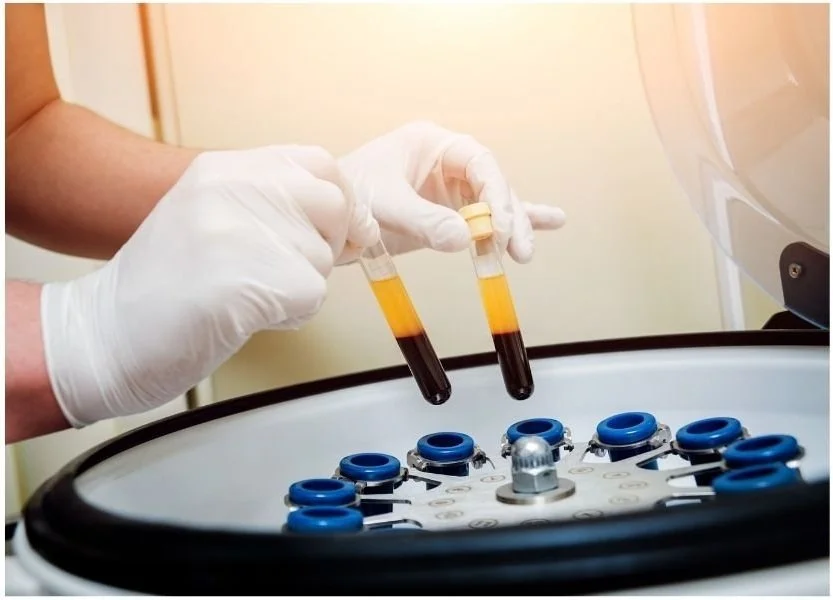
Your tube of blood is spun in a centrifuge to get separate the blood cells and get PRP.
Your skincare specialist applies the PRP onto your microneedled skin. Because of the tiny holes, the PRP is absorbed into your skin’s deep layers.
Both microneedling and Vampire Facial treatments are minimally-invasive. So compared to invasive cosmetic procedures like the surgical facelift, they cause less pain, you recover quicker, and you experience fewer complications.
For best results, you'll need maintenance treatments. Many skincare professionals recommend 3 to 4 treatments with 4 to 6 weeks in between.
The Side Effects
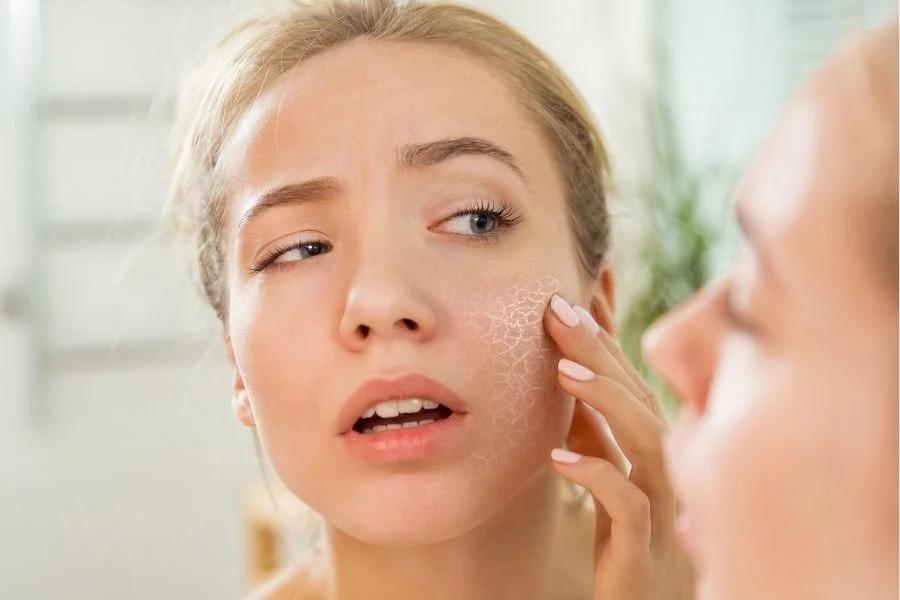
Microneedling can cause your skin to be dry and peel for a few days.
While microneedling is relatively safe, you must be aware of the potential side effects. Any side effect that you experience from the Vampire Facial is likely caused by the microneedling part of the treatment. This is because PRP is from your own body so you won’t have an allergic reaction to it.
Research shows that the risk of side effects is minimal and usually short-lived. The most common include:
Redness
Pain
Swelling
Dry or flaking skin
Lymph nodes swelling
A rash caused by an allergen (called irritant contact dermatitis)
Less common side effects that may be persistent include:
Post-inflammatory hyperpigmentation (dark patches of skin caused by the microneedle device)
Tram-track scarring (left by too much pressure when using the microneedle device)
Inflammation (called granuloma reactions)
The Recovery
The great thing about minimally-invasive facial treatments is that you will experience almost zero downtown. After microneedling and the Vampire Facial, you can go back to your regular routine very quickly.
For up to 78 hours after your treatment while the tiny holes in your skin may be open, you are susceptible to infection. To help prevent infection, do not:
Touch your face with unclean hands
Wear makeup
Do any activity that will cause you to sweat
For up to two weeks while your skin is healing, your skin may be red, dry, or flake. It’s really important to wear sunscreen for several days after your treatment.

Make sure to wear sunscreen for several days after your microneedling or Vampire Facial treatment.
The Results
Whether you decide to get the microneedling or Vampire Facial, you will notice rejuvenated, healthier skin over the next few weeks to months.
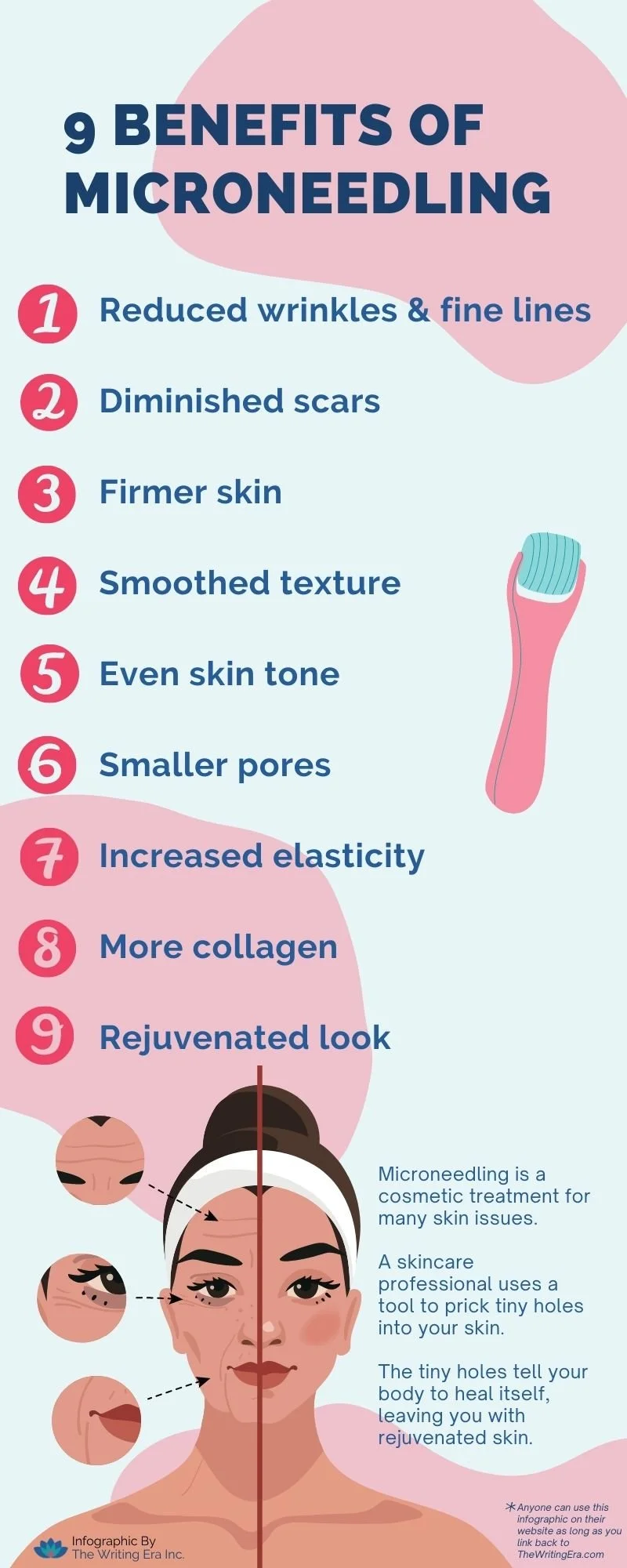
Infographic about the 9 amazing benefits of microneedling.
Resources
Cherney, K. (20 April, 2020). Microneedling: Collagen induction therapy. Healthline. https://www.healthline.com/health/microneedling
Cherney, K. (1 July, 2019). What to expect from microneedling with platelet-rich plasma (PRP). Healthline. https://www.healthline.com/health/beauty-skin-care/microneedling-with-prp
Chu, S., Foulad, D. P., & Mesinkovska, N. A. (2021). Safety profile for microneedling: A systematic review. Dermatologic Surgery, 47(9), 1249-1254. https://doi.org/10.1097/01.DSS.0000790428.70373.f6
Concept Medical. (n.d.). How does microneedling work? https://conceptmedical.ca/how-does-microneedling-work/
Curtis, L. (16 December, 2020). Vitamin C benefits for skin. Verywell Health. https://www.verywellhealth.com/vitamin-c-for-skin-5084225
Dermabella Clinic. (4 July). Vampire facial vs Microneedling, which one is better? https://dermabellaclinic.com/vampire-facial-vs-microneedling-which-one-is-better/
Dreher. G. (n.d.). Platelet-rich plasma (PRP) injections. John Hopkins Medicine. https://www.hopkinsmedicine.org/health/treatment-tests-and-therapies/plateletrich-plasma-prp-treatment
Donaldson Plastic Surgery. (7 October, 2021). Everything you need to know about the vampire facial. https://www.donaldsonplasticsurgery.com/microneedling-vs-vampire-facial/
Hou, A., Cohen, B., Haimovic, A., & Elbuluk, N. (2017). Microneedling: A comprehensive review. Dermatologic Surgery, 43(3), 321-339. http://doi.org/10.1097/DSS.0000000000000924
Your Skin RN. (25 June, 2021). What Is the difference between microneedling and the vampire (PRP) facial? https://yourskinrn.ca/what-is-the-difference-between-microneedling-and-the-vampire-prp-facial/